Brick Cladding Tiles – A Modern Approach to Exterior Design
There’s something quietly powerful about a well-designed facade. It doesn’t scream for attention—yet it holds it. And more often than not, that visual impact comes from one smart choice: brick cladding tiles.
Now, here’s where it gets interesting.
People often assume that cladding is just a decorative layer. In reality, it’s much more than that. It’s a calculated design decision—one that blends aesthetics, efficiency, and structural intelligence.

What Are Brick Cladding Tiles?
At their core, elevation brick tiles are thin cuts of real bricks. Not replicas. Not artificial textures. Actual bricks—refined, sliced, and repurposed for modern architecture.
This means you get:
- The raw charm of Traditional Bricks
- The strength associated with Solid Bricks
- But without the unnecessary weight
And that changes everything.
Instead of building thick masonry walls, you’re applying a sleek outer skin—what we call brick cladding—that transforms plain surfaces into architectural statements.
Types of Bricks Behind Cladding Systems
Cladding doesn’t exist in isolation. It draws from a wide family of brick types, each contributing in its own way:
-
Solid Bricks & Traditional Bricks
The foundation of conventional construction. Reliable, yes—but not always ideal for modern elevations due to their bulk. -
Modular Bricks & Pressed Bricks
Uniform, predictable, and easier to work with. These are often processed further into cladding-friendly formats. -
3 Hole Bricks & 10 Hole Bricks
Engineered for reduced weight and improved insulation. While not always visible, they support smarter structural systems behind cladding. -
Hollow Bricks
A practical choice for minimizing load. When paired with cladding, they create a highly efficient wall system. -
Clay Pavers Bricks
Known for their earthy tones and rugged appeal, these bricks often inspire rustic-style elevation brick tiles.
The Rise of Wire Cut Bricks in Cladding
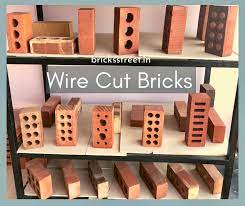
If you’ve noticed modern buildings with razor-sharp lines and seamless finishes, you’re likely looking at wire cut bricks.
More specifically, extruded wirecut bricks.
These are machine-crafted, not hand-molded. The result?
- Clean, sharp edges
- Consistent dimensions
- Smooth or precisely textured surfaces
And when these bricks are converted into brick cladding tiles, the finish becomes undeniably premium. Minimal joints, refined alignment, and a facade that feels both modern and timeless.
Why Brick Cladding Tiles Are Taking Over
Let’s not overcomplicate it. The shift toward cladding is happening for very real reasons:
- Faster installation compared to full brick construction
- Reduced structural load (especially compared to Solid Bricks)
- Greater design flexibility
- Lower long-term maintenance
And perhaps most importantly—it allows you to upgrade an existing wall without rebuilding it.
That alone makes it a game-changer.
Why Choose Bricksstreet
In a market full of inconsistency, precision becomes a luxury.
That’s where Bricksstreet stands out.
Known for delivering high-quality:
- extruded wirecut bricks
- wire cut bricks
- Premium elevation brick tiles
- Complete brick cladding solutions
The brand focuses on what actually matters—finish, durability, and architectural relevance. Whether it’s a residential facade or a commercial exterior, their materials are built to perform and designed to impress.
Final Thoughts
Architecture is evolving. Slowly, but unmistakably.
Heavy, traditional methods still have their place—no doubt. But when it comes to modern elevations, flexibility and finesse matter more than ever.
That’s exactly where brick cladding tiles come in.
They don’t just decorate a wall.
They redefine it.

Comments
Post a Comment