Brick Cladding Tiles vs Full Bricks: Which Is Better for Your Walls?
Brick is a popular choice for adding a warm, textured appearance to residential and commercial buildings. But when you want a brick finish on an existing wall, there are two common options: brick cladding tiles and full bricks.
Both can create an attractive brick surface, but they are used differently. Full bricks are generally part of the wall construction itself, while cladding tiles are applied over an existing surface as a finishing material.
The right choice depends on your wall structure, project type, available space, installation method, desired appearance, and overall budget.
If you are comparing options from a Solid Bricks Manufacturer in India Price search to a Cladding Bricks Manufacturer in India Price search, it is important to compare the complete project cost rather than looking at the material price alone.

What are brick cladding tiles?
Brick cladding tiles are thin brick or brick-look units designed to cover an existing wall surface.
They are available in different colours, textures, dimensions, and finishes. Depending on the product, they can be made from clay, concrete, or other materials designed for wall applications.
Because they are thinner than conventional masonry bricks, cladding tiles add less depth and weight to a wall.
They are commonly used for:
- Exterior feature walls
- House elevations
- Interior accent walls
- Living rooms
- Commercial spaces
- Restaurants
- Offices
- Reception areas
- Retail stores
- Boundary walls
- Renovation projects
The installation usually involves preparing the substrate, applying a suitable adhesive or mortar system, placing the tiles, and finishing the joints.
What are full bricks?
Full bricks are masonry units used to construct walls or other structures. They contribute to the physical construction of the wall rather than simply covering an existing surface.
Depending on their design and manufacturing process, full bricks can include solid bricks, perforated bricks, wire-cut bricks, pressed bricks, and other brick formats.
They are commonly used for:
- Load-bearing or infill walls where appropriate
- Partition walls
- Boundary walls
- Building construction
- Exposed brickwork
- Structural masonry applications where the selected brick is suitable
Full bricks generally require more space than thin cladding tiles because the complete brick forms part of the wall.
Brick cladding tiles vs full bricks
The biggest difference is how they are used.
| Factor | Brick cladding tiles | Full bricks |
|---|---|---|
| Main purpose | Wall finishing | Wall construction |
| Thickness | Usually thin | Much thicker |
| Existing wall required | Usually yes | Not necessarily |
| Added wall depth | Lower | Higher |
| Installation | Adhesive/mortar-based fixing | Masonry construction |
| Material requirement | Lower per surface area | Higher |
| Renovation suitability | Generally better | More complex |
| Structural role | Usually decorative/finish | Can form part of masonry |
| Design flexibility | High | High |
| Transport and handling | Generally easier | Heavier and bulkier |
These are general characteristics. Actual installation requirements depend on the product specification and project conditions.
When should you choose brick cladding tiles?
Brick cladding tiles are often a practical option when the wall already exists and you want to change its appearance.
For example, imagine an existing plastered exterior wall. Demolishing and rebuilding it just to achieve a brick finish would be unnecessary in many situations.
Cladding can provide a brick appearance without constructing a completely new brick wall.
It can also be useful when wall thickness is limited or when the design requires a relatively lightweight finish.
Renovation projects
Renovation is one of the strongest use cases for cladding.
Instead of removing an existing wall, a suitable cladding system can be installed over a properly prepared substrate.
Before installation, the wall should be checked for issues such as dampness, loose plaster, cracks, weak surfaces, and moisture penetration.
Interior feature walls
Full masonry is rarely necessary just to create a brick appearance inside a finished room.
Cladding tiles can be used on selected sections such as:
- TV walls
- Dining areas
- Bedroom feature walls
- Office backgrounds
- Reception walls
- Retail displays
The thinner format can also make planning around doors, windows, electrical points, and furniture easier.
When are full bricks a better option?
Full bricks make more sense when you are actually constructing a wall rather than simply adding a surface finish.
For new construction, the brick becomes part of the wall system. Depending on the structural design, it may be used for different types of masonry work.
Full bricks can also be a strong choice when the design specifically calls for genuine exposed brickwork with deep joints and the visual character of complete masonry.
If the wall is being built from scratch, there may be little reason to construct a conventional wall first and then add cladding over it unless the project design calls for that approach.
Comparing material prices
Price comparisons can become misleading when different brick products are being compared.
For example, searches such as
llow Blocks Manufacturer in India Price, and Cladding Bricks Manufacturer in India Price refer to products that can have different dimensions, manufacturing methods, applications, and quantities required per project.
Similarly, Modular Bricks Manufacturer in India Price may refer to standard modular brick formats, while cladding products are typically priced according to their surface coverage and thickness.
When comparing prices, check:
- Price per piece
- Price per square foot
- Coverage per box or pallet
- Thickness
- Dimensions
- Wastage allowance
- Packaging
- Transportation
- Adhesive or mortar
- Jointing material
- Installation charges
The cheapest piece does not necessarily produce the lowest finished wall cost.
Why full brick prices cannot be compared directly with cladding prices
A full brick may look inexpensive when you compare the price per piece with a cladding tile.
However, the comparison is incomplete.
Full brick construction also requires:
- Masonry labour
- Mortar
- More material volume
- Transportation
- Scaffolding where required
- Plastering or finishing if the wall is not exposed
- Potential structural or design adjustments
Cladding has a different cost structure. You need to consider the existing wall, surface preparation, adhesive, grout or jointing material, labour, cutting, wastage, and finishing.
The useful comparison is therefore cost per completed square foot, not simply the price of one unit.
Modular bricks vs cladding tiles
Modular Bricks Manufacturer in India Price searches are generally related to conventional brick masonry products made to standard dimensions.
Modular bricks are useful when you need predictable brick sizing for construction and masonry layouts.
Cladding tiles, on the other hand, are designed for surface application.
If your project involves building a new wall, modular bricks may be more appropriate. If you already have a wall and want to add a brick finish, cladding can be more convenient.
Hollow blocks vs full bricks
Hollow Blocks Manufacturer in India Price searches involve another category of masonry product.
Hollow blocks and bricks can reduce material use and may offer installation advantages depending on the construction system. Their application is different from decorative brick cladding.
Do not choose between hollow blocks, full bricks, and cladding tiles based only on appearance. First determine whether you are selecting a wall construction material or a surface finish.
A wall can also have one material as its underlying construction and another material as its exterior finish.
Wire cut bricks vs brick cladding
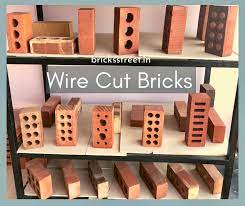
Wire-cut bricks are formed by extruding clay and cutting it into individual units with wires. They can have clean, consistent shapes and are widely used where the appearance of exposed brickwork is desired.
A Wire Cut Bricks Manufacturer in India Price search may therefore be relevant when you want genuine full-size exposed brickwork.
Wire-cut bricks can work well for:
- Exposed walls
- Exterior elevations
- Feature walls
- Boundary walls
- Contemporary brick architecture
Cladding tiles may be a better option when the underlying wall already exists and you mainly need the brick finish.
3-hole and 8-hole bricks
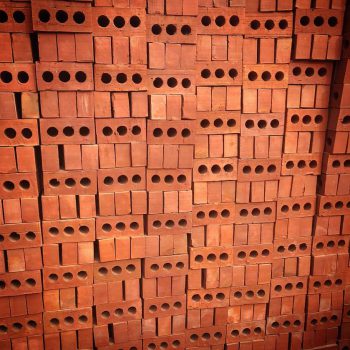
Brick designs with holes can have different construction and weight characteristics from solid bricks.
A 3 Hole Bricks Manufacturer in India Price search and an 8 Hole Bricks Manufacturer in India Price search may return products intended for different masonry requirements.
The number and arrangement of holes affect the brick's weight, material consumption, and handling. However, you should always check the manufacturer's specifications before selecting a particular brick for construction.
These products should not automatically be treated as alternatives to thin decorative cladding tiles.
What about 10-hole bricks?
A 10 Hole Bricks Manufacturer in India Price search may be relevant when comparing perforated brick options for masonry or design applications.
Perforated bricks can provide different weight and thermal characteristics depending on their composition and design.
Before purchasing, check:
- Brick dimensions
- Hole configuration
- Compressive strength
- Water absorption
- Intended application
- Manufacturer specifications
- Applicable project requirements
For a purely decorative brick finish over an existing wall, a dedicated cladding product may still be more suitable.
Pressed bricks vs cladding
Pressed bricks are manufactured using a pressing process that shapes the clay into the required form.
When comparing options through a Pressed Bricks Manufacturer in India Price search, pay attention to the product's finish, dimensions, strength, water absorption, colour, and intended use.
Pressed bricks can be suitable for exposed masonry where full-size bricks are required.
Cladding products remain different because they are designed primarily as a surface covering.
Can you buy modular bricks online?
The internet has made it easier to research and compare construction materials.
If you search for Buy Modular Bricks Online in India Price, you may find different suppliers and manufacturers offering various sizes and specifications.
However, brick products are heavy and relatively expensive to transport over long distances. Before ordering online, check:
- Delivery location
- Minimum order quantity
- Freight charges
- Packaging
- Breakage policy
- Product dimensions
- Batch availability
- Sample availability
- Delivery timeline
For large projects, a local or regional supplier may sometimes provide a better landed cost even if the listed product price is slightly higher elsewhere.
Appearance and design flexibility
Both full bricks and cladding tiles can create attractive walls, but they produce different visual effects.
Full bricks provide deeper joints and the physical depth associated with traditional masonry.
Cladding tiles can offer more control over:
- Pattern
- Joint width
- Colour combinations
- Feature-wall layouts
- Accent areas
- Mixed materials
Cladding can also be combined with materials such as wood, stone, metal, concrete, or painted surfaces to create different architectural effects.
Installation considerations
Installation is an important part of the decision.
For cladding tiles, the substrate needs to be suitable for the chosen fixing system. A weak, damp, dusty, or unstable surface can create problems regardless of how good the tiles are.
The installer should consider:
- Surface preparation
- Suitable adhesive or mortar
- Tile spacing
- Level and alignment
- Corner treatment
- Expansion or movement requirements where applicable
- Joint finishing
- Cleaning after installation
Full brickwork has different requirements, including masonry alignment, mortar joints, curing, support, and construction sequencing.
For exterior walls, product specifications and site conditions should be checked before installation.
Maintenance
Maintenance depends on the material, finish, location, exposure, and installation quality.
Exterior brick surfaces can collect dust and environmental deposits. Interior feature walls usually require less cleaning, but textured surfaces may collect more dust than smooth painted walls.
Before choosing a product, ask the supplier about:
- Cleaning method
- Sealing requirements
- Stain resistance
- Moisture suitability
- Colour stability
- Repair or replacement options
Do not assume that every brick or cladding product has the same maintenance requirements.
Which option costs less?
There is no universal answer.
Cladding may reduce material volume because it uses a thin layer over an existing wall. But the project still requires substrate preparation, fixing material, labour, and finishing.
Full bricks can be economical when you are constructing the wall from the beginning because the brick serves a construction purpose as well as providing the finished appearance.
The best comparison is based on the complete installed cost.
For example:
Cladding cost = tiles + preparation + adhesive/mortar + joints + labour + wastage + transport
Full brick wall cost = bricks + mortar + masonry labour + structural requirements + transport + finishing, where applicable
This approach gives you a more realistic project budget.
How to choose between brick cladding and full bricks
Use the following questions to narrow down your choice.
Do you already have a wall?
If yes, cladding may be more practical.
Are you constructing a new wall?
Full bricks may make more sense, depending on the wall design and structural system.
Do you need to minimise added thickness?
Thin cladding generally has an advantage.
Do you want deep masonry joints?
Full bricks provide the depth associated with conventional brickwork.
Is the wall mainly decorative?
Cladding can be suitable when the underlying wall already provides the required structure.
Are you comparing prices?
Calculate the complete installed cost rather than comparing individual units.
What to check before buying
Whether you choose cladding or full bricks, request product information from the manufacturer or supplier.
Check:
- Exact dimensions
- Thickness
- Weight
- Compressive strength where relevant
- Water absorption
- Surface finish
- Colour variation
- Batch consistency
- Coverage
- Packaging
- Minimum order quantity
- Transportation cost
- Installation requirements
For large projects, ordering samples before finalising the material is a sensible step. The colour and texture can look different under natural light, indoor lighting, and on a larger wall.
Final comparison
Brick cladding tiles and full bricks are both useful, but they solve different problems.
Choose brick cladding tiles when:
- You already have a wall
- You want a brick finish
- You are renovating a property
- You want to limit added wall thickness
- You are creating an interior feature wall
- You want to cover selected sections rather than construct a complete brick wall
Choose full bricks when:
- You are constructing a new masonry wall
- The brick is part of the wall construction
- You want genuine full-depth exposed brickwork
- The project design requires conventional masonry
When researching a Bricks Manufacturer in India Price, Wire Cut Bricks Manufacturer in India Price, Pressed Bricks Manufacturer in India Price, or Cladding Bricks Manufacturer in India Price, compare the products according to their intended application.
The right material is the one that fits your wall system, design, installation method, and total project budget.

Comments
Post a Comment