How to Choose the Right Exposed Bricks for Your Home Facade
An exposed brick façade can give a house a warm, natural and distinctive appearance. But choosing the right brick is not simply about picking a colour from a catalogue.
Brick size, shape, texture, manufacturing method, strength, water absorption and installation pattern can all affect the final appearance of your home façade.
The right product should also suit the local climate and the construction system used for the wall.
If you are comparing solid bricks, hollow blocks, modular bricks, wire cut bricks, pressed bricks or cladding bricks, this guide will help you understand what to check before buying.

What are exposed bricks?
Exposed bricks are bricks that remain visible after construction instead of being covered with plaster or another wall finish.
Because the brick becomes part of the façade design, appearance and consistency matter more than they would for bricks that will eventually be covered.
You should check:
- Brick colour
- Dimensions
- Surface texture
- Edge quality
- Shape
- Firing quality
- Water absorption
- Strength
- Availability
- Installation requirements
- brick manufacturers in india
A good-looking brick sample is only the starting point. The product also needs to meet the requirements of the actual wall.
Start with your home facade design
Before selecting a brick, decide how you want the façade to look.
For example, a modern home may work well with clean, uniform bricks and narrow mortar joints. A rustic house may suit more natural colour variation and textured surfaces.
Consider the following:
Modern facade
Clean edges, consistent dimensions and simple brick bonds can create a contemporary appearance.
Long-format bricks, darker shades and minimal mortar joints are often considered for modern designs.
Traditional facade
Traditional homes can use standard brick proportions and natural red or earthy shades.
A conventional running bond can create a familiar masonry appearance.
Rustic facade
If you want a more natural appearance, textured bricks with slight shade variation may be suitable.
However, excessive variation can make a large wall appear uneven, so samples should always be checked before ordering.
Choose between solid and perforated bricks
One of the first decisions is whether the façade should use solid bricks or bricks with holes.
The choice depends on the structural design, wall system and appearance required.
Solid bricks
Solid bricks have a relatively dense body without large continuous openings.
They can provide a traditional exposed brick appearance and are available in different colours, textures and sizes.
When comparing the Solid Bricks Manufacturer in India Price, do not compare only the per-brick amount. Check the brick size, specifications, freight, taxes and installation requirements as well.
Hollow and perforated bricks
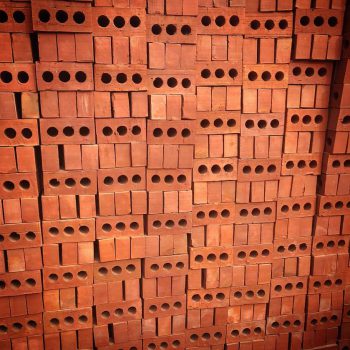
Hollow or perforated bricks contain openings through the unit.
Their weight, dimensions and performance can differ from solid bricks.
If you are checking Hollow Blocks Manufacturer in India Price, confirm whether you are comparing the same product type and dimensions. A hollow block and a conventional exposed brick should not be compared simply by piece price.
Consider modular bricks for a clean facade
Modular bricks are manufactured to standard dimensions and are commonly used in masonry construction.
Their consistent shape can make it easier to plan wall layouts and mortar joints.
If you are checking Modular Bricks Manufacturer in India Price, compare quotations based on the exact brick dimensions and specifications.
The number of bricks required per square metre can vary according to the brick size and mortar joint.
Should you buy modular bricks online?
Online purchasing can make it easier to compare products and contact suppliers.
If you are searching for Buy Modular Bricks Online in India Price, make sure the listed price clearly explains what is included.
Check:
- Brick dimensions
- Minimum order quantity
- Delivery charges
- Taxes
- Product specifications
- Actual product photographs
- Return or replacement terms
- Delivery location
For a large façade project, request a physical sample before placing a bulk order.
Check 10 hole bricks carefully
A 10 Hole Bricks Manufacturer in India Price comparison should focus on the complete product specification rather than the number of holes alone.
Ten-hole bricks can differ in dimensions, hole arrangement, weight, strength and manufacturing quality.
Before selecting them for a home project, ask the manufacturer for:
- Exact dimensions
- Weight
- Hole configuration
- Strength information
- Water absorption data
- Recommended application
The product should be selected according to the wall design and technical requirements provided by the architect or engineer.
Wire cut bricks for exposed facades
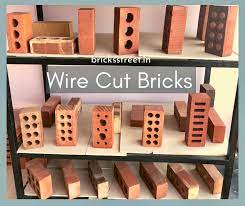
Wire cut bricks are formed by extruding prepared clay and cutting the clay column into individual pieces.
They can offer relatively consistent dimensions and can be produced in different colours and surface textures.
For exposed facades, wire cut bricks can be considered when the design requires a more controlled brick appearance.
When checking Wire Cut Bricks Manufacturer in India Price, compare:
- Brick size
- Surface finish
- Colour
- Thickness
- Strength
- Water absorption
- Quantity
- Freight
- Packaging
- Applicable taxes
A lower factory price may not result in a lower delivered project cost.
What are cladding bricks?
Cladding bricks are thinner brick-based products designed for use as a wall finish.
They can create an exposed brick appearance without using full-size masonry bricks across the entire wall.
They are often considered for:
- Front elevations
- Boundary walls
- Interior feature walls
- Renovation projects
- Commercial façades
- Selected exterior surfaces
If you are checking Cladding Bricks Manufacturer in India Price, ask whether the quotation is for material only or includes transportation and other charges.
Also confirm the recommended adhesive or fixing system before installation.
Compare 3 hole and 8 hole bricks
The number of holes is only one part of a brick's specification.
3 hole bricks
A 3 Hole Bricks Manufacturer in India Price comparison should include size, weight, strength and intended application.
Different manufacturers may produce 3-hole bricks with different dimensions and specifications.
Do not select a product based solely on the hole pattern.
8 hole bricks
The same principle applies when comparing an 8 Hole Bricks Manufacturer in India Price.
Check the actual product dimensions and technical information before deciding whether the brick is suitable for the façade.
If the bricks will remain exposed, also inspect the visible face for texture, colour consistency and edge quality.
Pressed bricks for a different surface appearance
Pressed bricks are produced using mechanical pressure during forming.
They can have a different appearance and surface character compared with extruded or wire cut bricks.
If you are comparing Pressed Bricks Manufacturer in India Price, look at the complete specification.
Ask about:
- Dimensions
- Surface finish
- Colour options
- Strength
- Water absorption
- Production capacity
- Minimum order quantity
- Delivery
The manufacturing process can affect the final appearance, so physical samples are useful.
Compare brick colours in natural light
Brick colour can look different under artificial lighting, direct sunlight and shade.
Always check samples outdoors or in conditions similar to the actual façade.
Common exposed brick colours include:
- Light red
- Natural red
- Deep red
- Brown
- Rustic shades
- Earthy tones
- Mixed natural colours
Natural variation can add character to a façade, but excessive variation may not suit a clean modern design.
Discuss the expected shade range with the manufacturer before placing the order.
Check brick dimensions
Dimensions have a major effect on the appearance of the façade.
If bricks are inconsistent in size, mortar joints may become irregular.
Check:
- Length
- Width
- Height
- Thickness
- Dimensional tolerance
Measure multiple samples rather than checking a single piece.
The final quantity calculation should also use the actual brick dimensions.
Look at the brick edges
Edges become highly visible on exposed masonry.
Check whether the samples have:
- Clean edges
- Excessive chips
- Broken corners
- Warping
- Uneven faces
- Surface cracks
Some handmade-style bricks may intentionally have irregular edges. That is different from uncontrolled manufacturing defects.
The desired edge profile should match the architectural design.
Check water absorption
Water absorption matters when selecting bricks for exterior walls.
The appropriate specification depends on the product, wall construction, climate and exposure.
Ask the manufacturer for available test information and discuss the requirements with your architect or engineer.
Do not judge the complete product only by placing one brick in water at home.
Check strength requirements
The required brick strength depends on the construction system.
A decorative cladding product may have different requirements from a masonry brick that forms part of the wall.
Before ordering, confirm which product is actually specified for your construction.
The manufacturer should provide available technical information so your architect or engineer can check its suitability.
Consider your local climate
Exterior bricks are exposed to weather conditions throughout the year.
Depending on the location, the façade may experience:
- Heavy rainfall
- Strong sunlight
- Temperature changes
- Dust
- Moisture
- Pollution
Your brick selection should therefore consider the expected exposure and the manufacturer's recommended application.
Installation details also matter. Good drainage, suitable joints and proper detailing can affect the long-term performance of an exposed façade.
Choose the right mortar colour
The mortar is part of the final façade appearance.
A light mortar can create stronger contrast between individual bricks. A darker mortar can produce a more continuous visual effect.
Before finalising the material, create a small sample panel with the proposed:
- Brick
- Mortar
- Joint width
- Bond pattern
This gives you a better idea of the final appearance than looking at loose bricks.
Select the right brick bond
The same brick can look very different depending on the laying pattern.
Running bond
Each brick is offset from the brick below it.
It is a common and simple pattern for residential walls.
Stack bond
Bricks are aligned vertically and horizontally.
This creates a more structured appearance and is often considered for contemporary designs.
Other patterns
Architects can use different arrangements for feature sections.
However, complex patterns can increase cutting and wastage, so quantity should be calculated accordingly.
Calculate the actual quantity
Do not order bricks based only on the total wall area.
The required quantity depends on:
- Brick dimensions
- Mortar joint size
- Wall area
- Openings
- Bond pattern
- Cutting
- Wastage
For example, two bricks with different dimensions can require very different quantities for the same wall area.
Ask your contractor or architect to prepare the final material calculation using the selected product.
Understand the real brick price
Searching for Solid Bricks Manufacturer in India Price, Modular Bricks Manufacturer in India Price or Wire Cut Bricks Manufacturer in India Price can give you an initial idea of market quotations.
However, the final cost should be calculated using the complete landed price.
Consider:
| Cost factor | What to check |
|---|---|
| Product price | Price per piece or square foot |
| Quantity | Total requirement |
| Packaging | Whether included |
| Loading | Included or additional |
| Freight | Cost to your location |
| Unloading | Site responsibility |
| Taxes | Applicable taxes |
| Wastage | Additional material requirement |
| Installation | Masonry or cladding installation |
| Mortar/adhesive | Additional material |
Always compare quotations on the same basis.
Don't compare different bricks only by piece price
A common mistake is comparing one brick at ₹X with another brick at ₹Y without checking their dimensions.
A larger brick may cover more wall area per piece.
A thinner cladding product may have a different installation method.
A perforated brick may have a different weight and application.
Therefore, compare products based on cost per usable wall area, product specification and installation requirements rather than piece price alone.
Buy from a manufacturer or supplier?
Both options can work depending on the project.
Buying directly from a manufacturer can be useful for larger quantities or customised products.
A supplier may be useful when you need products from different manufacturers or want consolidated procurement.
Whichever option you choose, check:
- Physical samples
- Product specifications
- Production capacity
- Delivery schedule
- Packaging
- Business details
- Replacement policy
Ask for a sample before bulk ordering
A physical sample should be approved before placing a large order.
Compare the sample for:
- Colour
- Size
- Texture
- Thickness
- Edge quality
- Surface finish
If possible, create a small sample section on the actual wall.
This allows you to evaluate the brick together with the mortar and laying pattern.
Check packaging and transportation
Bricks can be damaged during loading and transportation.
Before ordering, ask how the material will be:
- Packed
- Stacked
- Loaded
- Transported
- Unloaded
Also confirm how damaged pieces will be handled.
For large orders, document the agreed replacement or shortage procedure in the purchase order.
Common mistakes when choosing exposed bricks
Choosing a brick only because it looks good
A beautiful sample does not automatically mean the product suits your wall.
Check technical specifications and application requirements.
Buying based only on price
The lowest per-piece quotation may not have the lowest delivered cost.
Compare freight, taxes, wastage and installation.
Skipping the sample
Photographs cannot show the exact colour and texture.
Always inspect the physical product.
Ignoring mortar colour
The same brick can look completely different with different mortar colours and joint sizes.
Create a sample panel before finalising the façade.
Ordering too early
If the product is stored incorrectly for a long period, damage or contamination can occur.
Coordinate delivery with the construction schedule and storage capacity.
Ordering too little
Future batches may have some variation in shade.
For a large exposed façade, plan the quantity carefully and discuss additional stock with your contractor.
Questions to ask your brick manufacturer
Before placing an order, ask:
- What are the exact dimensions?
- What is the product's intended application?
- Is it suitable for exterior exposure?
- What colours are available?
- Can I receive a physical sample?
- What technical specifications are available?
- What is the dimensional tolerance?
- What is the minimum order quantity?
- What is the production lead time?
- Is transportation included?
- How is the product packaged?
- How are damaged pieces handled?
- Can the same product be supplied in future?
- Are custom sizes available?
- What is the complete delivered price?
Exposed brick selection checklist
Before confirming your purchase, check:
Brick type selected
Dimensions confirmed
Colour approved
Texture approved
Physical sample checked
Technical specifications checked
Exterior suitability confirmed
Mortar colour selected
Brick bond selected
Quantity calculated
Wastage considered
Freight confirmed
Taxes confirmed
Packaging discussed
Delivery schedule confirmed
Damage policy documented
Final thoughts
Choosing exposed bricks for your home façade requires a balance between appearance, technical suitability and project cost.
Start with the design you want, then compare the available brick types. Solid, modular, wire cut, pressed, perforated and cladding bricks can all have different characteristics and applications.
When comparing Hollow Blocks Manufacturer in India Price, 10 Hole Bricks Manufacturer in India Price, 3 Hole Bricks Manufacturer in India Price or 8 Hole Bricks Manufacturer in India Price, always look beyond the number printed on the quotation.
Check the actual dimensions, quality, delivered cost, installation requirements and suitability for your project.
A physical sample, clear product specification and properly calculated quantity can help you make a more informed choice before the façade work begins.

Comments
Post a Comment