3 Hole Bricks for Modern Construction: Benefits, Uses and Applications
Choosing the right bricks affects wall strength, construction costs, installation time, and the final appearance of a building. Three-hole bricks are one option for projects that require a brick unit with a specific shape and internal cavity design.
Their suitability depends on the brick's dimensions, material, compressive strength, weight, and intended application. Builders should also consider local building requirements and the specifications provided by the manufacturer.
This guide explains the benefits, uses, and applications of 3 hole bricks, along with the differences between other brick types available for modern construction.

What Are 3 Hole Bricks?
3 hole bricks are brick units manufactured with three openings through the body of the brick. Depending on the product design, these openings can reduce the amount of material used and affect the unit's weight and handling characteristics.
The size, shape, and orientation of the holes vary by manufacturer. Some bricks are designed for particular wall systems or construction methods, so buyers should confirm the product specifications before ordering.
Three-hole bricks may be considered for selected masonry applications, but the number of holes alone does not determine their strength or suitability for load-bearing walls.
Before choosing this brick type, check the following specifications:
Brick dimensions and dimensional tolerances
Compressive strength
Water absorption
Unit weight
Hole dimensions and arrangement
Intended use and installation requirements
Applicable product standards
These details help contractors determine whether the bricks meet the requirements of their construction project.
Benefits of 3 Hole Bricks in Modern Construction
The benefits of three-hole bricks depend on their material, design, and manufacturing quality. When selected for an appropriate application, they can offer several practical advantages.
1. Easier Handling in Suitable Applications
A brick with internal openings may weigh less than a comparable solid unit of the same external dimensions. The actual weight difference depends on the brick's material, size, and cavity design.
Lower unit weight can make handling easier for workers and may affect the overall weight of a masonry wall. However, buyers should compare the actual weights of the products rather than assuming every three-hole brick is lightweight.
2. Efficient Material Use
Internal openings reduce the amount of material present in each brick. This can affect material consumption during manufacturing, although the final environmental and cost benefits depend on production methods, firing or curing requirements, transport, and wastage.
For construction buyers, the relevant comparison is the total cost of the finished wall, not just the price of an individual brick.
3. Potential Thermal Performance Benefits
Air spaces inside a brick can affect heat transfer through the unit. However, thermal performance depends on the cavity geometry, brick material, wall thickness, mortar joints, plaster, and the complete wall assembly.
A three-hole brick should not automatically be considered better for insulation than a solid brick. Buyers who need improved indoor thermal comfort should request relevant test data or assess the complete wall design.
4. Flexibility in Wall Design
Three-hole bricks may suit particular masonry layouts where their dimensions and strength match the project requirements. Their use should be based on the approved design and the manufacturer's guidance.
Architects and contractors should consider wall thickness, stability, openings, connections, and the loads the wall must support before selecting a brick type.
5. Compatibility With Planned Construction Methods
A brick's dimensions and hole arrangement can influence how it is laid and cut. Selecting units that suit the planned bond pattern and wall dimensions may help reduce unnecessary cutting and material waste.
Before purchasing, confirm that the brick size is compatible with the design drawings and the contractor's installation method.
Common Applications of 3 Hole Bricks
The appropriate use of three-hole bricks depends on their tested properties and the project's structural requirements. Possible applications may include selected masonry walls and other non-structural uses where the product is approved for that purpose.
Partition Walls
Partition walls separate rooms or internal areas. Three-hole bricks may be considered for these walls if their strength, weight, dimensions, and wall stability meet the design requirements.
For taller partitions, builders must also consider lateral stability, door openings, fixing points, and connections to adjoining walls or structural elements.
Residential Construction
Some residential projects use specially designed hollow or perforated bricks in selected wall systems. Before using three-hole bricks in a house, check whether the design calls for load-bearing masonry, non-load-bearing walls, or infill between structural frames.
A brick should not be used for a load-bearing application simply because it looks similar to another approved masonry unit.
Commercial Buildings
Commercial projects may require bricks for internal walls, service areas, or other masonry applications. The selected product must meet the building's performance requirements, including strength, fire resistance, and acoustic needs where applicable.
Project teams should verify that the chosen brick is permitted by the specifications and applicable building standards.
Boundary and Compound Walls
Three-hole bricks may be suitable for some boundary wall designs, depending on their strength and the wall's height and exposure. Outdoor walls must account for wind loads, foundations, moisture, and other site conditions.
A qualified professional should determine the required wall design, particularly for tall or exposed boundary walls.
3 Hole Bricks vs Solid Bricks
Solid bricks have no large internal cavities of the type found in hollow or perforated units. They may be selected for applications requiring specific strength, mass, or other properties.
Three-hole bricks contain openings that change their material distribution and potentially their weight. Whether this is an advantage depends on the product's tested performance.
| Comparison factor | 3 hole bricks | Solid bricks |
|---|---|---|
| Internal structure | Three openings | Generally solid, without large internal cavities |
| Unit weight | Depends on dimensions, material, and cavity design | Depends on dimensions and material |
| Material use | Openings reduce material within the unit | More material within the same external dimensions |
| Thermal performance | Depends on cavity design and complete wall assembly | Depends on material, density, and wall construction |
| Strength | Must be verified from product test data | Must be verified from product test data |
| Typical selection factors | Weight, wall design, dimensions, and tested performance | Strength, mass, dimensions, and intended application |
If a project requires solid masonry units, consult a Solid Bricks Manufacturer in India and compare the available product specifications. Buyers searching for a Solid Bricks Manufacturer in India Price should request a quotation that states the brick size, grade, quantity, delivery location, and applicable taxes.
3 Hole Bricks vs 8 Hole and 10 Hole Bricks
The number of holes is one way to describe a brick's design, but it does not establish a universal ranking of quality or performance.
An 8-hole brick may have different dimensions, cavity sizes, and material composition from a 3-hole brick. The same applies to a 10-hole brick. A higher hole count does not automatically mean lower weight, better insulation, or lower strength.
| Factor | 3 hole bricks | 8 hole bricks | 10 hole bricks |
|---|---|---|---|
| Number of openings | Three | Eight | Ten |
| Overall weight | Depends on unit design | Depends on unit design | Depends on unit design |
| Compressive strength | Requires test data | Requires test data | Requires test data |
| Thermal performance | Depends on the complete wall assembly | Depends on the complete wall assembly | Depends on the complete wall assembly |
| Best selection method | Match specifications to the project | Match specifications to the project | Match specifications to the project |
A buyer comparing products from an 8 Hole Bricks Manufacturer in India should review the unit weight, dimensions, compressive strength, and water absorption. Those looking for an 8 Hole Bricks Manufacturer in India Price should also compare delivery charges and the cost per square metre of completed wall.
Similarly, request technical data and quotations from a 10 Hole Bricks Manufacturer in India. A search for a 10 Hole Bricks Manufacturer in India Price should lead to a comparison of equivalent grades and sizes, not just the number of openings.
Other Brick Types Used in Modern Construction
Three-hole bricks are only one option among the masonry products available for construction. The right alternative depends on the project's purpose, budget, design, and performance requirements.
Hollow Blocks
Hollow blocks contain internal cavities and are available in different materials, shapes, and sizes. They may be used for selected wall systems when the product meets the relevant design and building requirements.
Their suitability depends on compressive strength, dimensions, density, and the method of construction.
Buyers comparing options from a Hollow Blocks Manufacturer in India should specify whether they need concrete masonry blocks, clay units, or another product type. For a Hollow Blocks Manufacturer in India Price quotation, confirm the block dimensions, grade, quantity, transport cost, and intended application.
Modular Bricks
Modular bricks follow defined dimensional conventions that help coordinate masonry layouts. Their standardised dimensions can simplify planning, quantity estimation, and alignment with other building components.
However, buyers should confirm the exact size and tolerance of the product because specifications may differ by market and manufacturer.
A Modular Bricks Manufacturer in India can provide details about available sizes, material, strength, and packaging. If you want to Buy Modular Bricks Online in India, compare the listed specifications with the construction drawings and confirm freight, minimum order quantity, and delivery arrangements before purchasing.
For a Buy Modular Bricks Online in India Price comparison, check whether the quotation covers only the bricks or also includes transportation, handling, and taxes.
Cladding Bricks
Cladding bricks are selected for the visible finish of a wall. They can provide a brick appearance on exterior or interior surfaces without necessarily serving as the main structural masonry unit.
Installation requirements depend on the cladding system, substrate, fixing method, moisture management, and exposure conditions.
A Cladding Bricks Manufacturer in India can provide product details, finishes, dimensions, and installation guidance. Buyers searching for a Cladding Bricks Manufacturer in India Price should compare the cost of the bricks with adhesives or mechanical fixings, labour, surface preparation, and any required weatherproofing details.
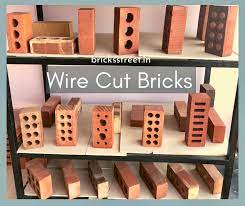
Wire Cut Bricks
Wire cut bricks are shaped by cutting prepared clay material with wires before firing. Their surface and dimensions depend on the manufacturing process and the specific product.
They are commonly considered for exposed brickwork and other applications where appearance and dimensional consistency matter. The suitability of a particular unit still depends on its tested properties and intended use.
A Wire Cut Bricks Manufacturer in India can advise buyers about available sizes, colours, finishes, and grades. When comparing a Wire Cut Bricks Manufacturer in India Price, consider the product's dimensions, strength, water absorption, wastage allowance, and delivery cost.
Pressed Bricks
Pressed bricks are formed by pressing prepared material into moulds. The manufacturing method can influence the shape, finish, density, and dimensional characteristics of the finished product.
Their suitability depends on the material used, production process, and the performance requirements of the project.
A Pressed Bricks Manufacturer in India can provide technical specifications and available product options. Buyers should compare strength, water absorption, appearance, and installation requirements before making a decision.
How to Calculate the Number of 3 Hole Bricks Required
Accurate quantity estimation helps control material costs and reduce unnecessary waste.
Start by measuring the total wall area. Multiply the wall length by its height, then subtract the area of doors, windows, and other openings.
Next, determine the number of bricks required per square metre or square foot based on the actual brick dimensions and the planned mortar joints. This figure should come from the chosen brick size and the wall layout.
Use the following method:
Calculate the net wall area.
Confirm the brick's actual dimensions.
Account for mortar joints and the masonry pattern.
Calculate the estimated number of bricks per unit area.
Multiply the net wall area by the estimated brick requirement.
Add an appropriate allowance for cutting, breakage, and site wastage.
The wastage allowance should reflect the project's complexity, handling practices, and supplier packaging. Avoid using a generic bricks-per-square-foot figure without checking the product dimensions.
For large projects, ask the contractor or quantity surveyor to verify the estimate before placing a bulk order.
How to Choose the Right 3 Hole Brick Manufacturer in India
Choosing a manufacturer requires checking both product quality and the supplier's ability to meet the project's requirements.
Review Technical Documentation
Ask for the product's technical data sheet and relevant test reports. Confirm dimensions, strength, water absorption, and any other properties specified by the project.
Inspect Product Samples
Where possible, inspect samples for shape, visible defects, and dimensional consistency. Visual inspection is useful, but it cannot replace laboratory testing where performance requirements apply.
Confirm Production Capacity
For large orders, ask whether the manufacturer can supply the required quantity within the project schedule. Discuss batch consistency, minimum order quantities, packaging, and delivery arrangements.
Compare Complete Project Costs
The purchase price is only one part of the cost. Include transport, unloading, storage, breakage, mortar, labour, and installation when comparing different brick types.
Verify Intended Use
Ask the manufacturer whether the product is intended for load-bearing masonry, non-load-bearing walls, cladding, or another application. Confirm that the use is supported by the product's technical data and approved construction design.
Final Thoughts
Three-hole bricks can be a suitable option for selected masonry applications when their dimensions, strength, weight, and other properties meet the project's requirements. Their performance cannot be determined by hole count alone.
Before purchasing, compare three-hole bricks with solid bricks, hollow blocks, modular bricks, and other available options. Review the technical specifications, calculate the required quantity, and obtain quotations that include delivery and other applicable costs.
A reliable manufacturer should provide clear product information and help you identify the appropriate grade for your construction needs. The best choice is the product that meets the project's design requirements and delivers the required performance within the overall construction budget.

Comments
Post a Comment