Brick Cladding for Boundary Walls: Design, Installation and Material Selection
A boundary wall does more than mark the limits of a property. It provides privacy, improves security and contributes to the overall appearance of a building.
Brick cladding can give an ordinary boundary wall a more natural and finished look. It offers the appearance of exposed brickwork without requiring the entire wall to be constructed from facing bricks.
However, successful cladding depends on more than choosing an attractive brick. The wall substrate, fixing method, weather exposure and material specifications all affect the final result.
This guide explains how to select brick cladding materials, plan the design and manage installation for residential and commercial boundary walls.

What Is Brick Cladding for Boundary Walls?
Brick cladding is a decorative outer layer installed over an existing or newly constructed wall. It uses thin brick units or specially manufactured cladding bricks to create the appearance of brickwork.
Unlike conventional masonry, thin brick cladding does not automatically carry the structural loads of the building. The supporting wall or frame provides the structural strength.
For boundary walls, brick cladding can be used to:
Improve the appearance of plain concrete walls.
Create a natural brick finish around property entrances.
Match the exterior design of the main building.
Add texture to garden and landscape walls.
Create decorative sections around gates and pillars.
The selected cladding system must be suitable for outdoor exposure and securely fixed to the supporting surface.
Why Choose Brick Cladding for Boundary Walls?
Boundary walls often cover large areas. Their appearance can influence the overall look of a property.
Brick cladding offers several design possibilities.
1. Natural Brick Appearance
Brick cladding creates the familiar appearance of exposed brickwork. Its colour and texture can complement modern, traditional and industrial architectural styles.
Red, brown and terracotta shades work well with greenery, stone paving and metal gates.
2. Different Design Options
Cladding bricks are available in different sizes, colours and surface finishes. Designers can use a single shade for a uniform wall or combine selected tones for visual variation.
The final pattern should suit the property's architectural style.
3. Suitable for Feature Sections
Brick cladding does not need to cover the complete boundary wall. It can be used around entrance pillars, gate sections and selected landscape features.
This approach can create a distinctive appearance while keeping the design balanced.
4. Compatibility with Other Materials
Brick cladding can be combined with concrete, stone, timber and metal.
For example, a boundary wall may use brick cladding around the main entrance, a concrete coping on top and a metal gate between brick pillars.
The materials should be selected together to create a consistent design.
Design Ideas for Brick-Clad Boundary Walls
The right design depends on the property size, surrounding landscape and desired level of privacy.
1. Full Brick-Clad Boundary Wall
Covering the complete visible wall with brick cladding creates a consistent exterior appearance.
This design can suit independent houses, villas, farmhouses and commercial properties.
Choose a brick shade that complements the main building facade. Plan the corners, wall ends and gate openings before installation.
2. Brick Cladding Around Entrance Gates
The entrance is often the most noticeable section of a boundary wall.
Use brick cladding around gate pillars and selected wall sections to create a defined entrance. Combine it with metal gates or timber-finish panels.
Keep the cladding layout aligned with the gate dimensions and architectural drawings.
3. Brick and Concrete Combination
Concrete provides a simple background for brick cladding.
A boundary wall can use exposed concrete panels with brick-clad sections between them. This creates contrast without making the elevation too busy.
Ensure that the transition between both materials is properly detailed.
4. Rustic Garden Boundary Wall
Brick cladding can complement gardens, outdoor seating areas and landscape pathways.
Choose natural clay shades and suitable textures. Add plants near the wall to create a connection between the building and outdoor space.
Avoid allowing soil and water to remain against the cladding for long periods.
5. Modern Horizontal Brick Pattern
A horizontal brick layout creates a clean visual rhythm.
Use consistent brick dimensions and joint spacing to maintain straight courses. This style can work well with modern houses and commercial properties.
6. Feature Pillars and Decorative Sections
Instead of cladding the entire boundary, apply brick finishes to selected pillars or wall sections.
This can help control material use while creating visual interest. Coordinate the design with the property's entrance, lighting and landscape features.
Choosing the Right Brick Material for Boundary Wall Cladding
Material selection is one of the most important decisions in a cladding project.
Not every brick is suitable for every application. Some products are designed for structural masonry, while others are manufactured mainly for decorative finishes.
Understand the differences before placing an order.
Solid Bricks
Solid bricks have no large intentional cavities through their body.
They are commonly used in masonry construction, depending on their specifications and intended application.
A Solid Bricks Manufacturer in India Price comparison should include dimensions, compressive strength, water absorption, quality and transportation.
Solid bricks may also be used as the basis for a facing design, but they are not automatically equivalent to thin brick cladding products.
Hollow Blocks
Hollow blocks contain cavities that reduce their weight compared with a solid unit of similar external dimensions.
They are commonly used in suitable wall construction systems. Their suitability depends on strength, dimensions and the structural design.
A Hollow Blocks Manufacturer in India Price enquiry should specify the block size, type, grade and intended use.
Do not assume that hollow blocks are decorative cladding products. They generally serve a different construction purpose.
Modular Bricks
Modular bricks follow standardised dimensions that help simplify construction planning.
They can support consistent masonry layouts and predictable material calculations.
When comparing a Modular Bricks Manufacturer in India Price, check the actual dimensions, dimensional tolerance and product specifications.
Buy Modular Bricks Online in India Price searches should also account for freight, packaging and unloading costs. The listed price alone may not reflect the final delivered cost.
10 Hole Bricks
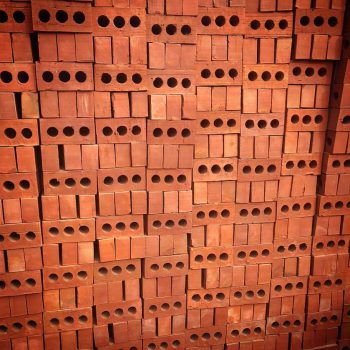
10-hole bricks contain multiple perforations through the unit. Their weight and performance depend on the material, hole arrangement and manufacturing quality.
A 10 Hole Bricks Manufacturer in India Price comparison should include the product's intended application and relevant test information.
Do not select perforated bricks for cladding simply because they have a decorative appearance. Confirm whether the product is designed for the proposed use.
3 Hole Bricks
3-hole bricks contain three openings through the brick body. Their application depends on the product's design and technical properties.
When comparing a 3 Hole Bricks Manufacturer in India Price, check dimensions, strength, water absorption and suitability for exposed conditions.
8 Hole Bricks
8-hole bricks have eight openings through their body. They may be used in suitable masonry applications depending on their specifications.
An 8 Hole Bricks Manufacturer in India Price enquiry should include the required dimensions, quantity and delivery location.
Pressed Bricks
Pressed bricks are shaped using a pressing process. Depending on the manufacturer, they may have defined edges and a particular surface finish.
A Pressed Bricks Manufacturer in India Price comparison should consider dimensional consistency, firing quality, surface finish and intended application.
Wire Cut Bricks
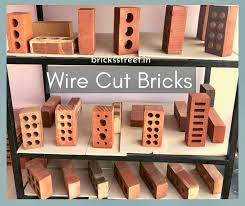
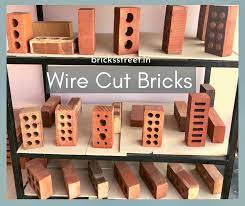
Wire cut bricks are formed through extrusion and divided into individual units using cutting wires.
They generally offer relatively consistent dimensions and can be available in different surface finishes.
A Wire Cut Bricks Manufacturer in India Price enquiry should include the brick size, finish, product grade and quantity.
Cladding Bricks
Cladding bricks are specifically selected or manufactured for decorative wall finishes. Some are thin brick units designed for installation over a prepared substrate.
A Cladding Bricks Manufacturer in India Price comparison should include:
Actual unit dimensions and thickness.
Coverage per square metre.
Surface finish and colour.
Water absorption and weather suitability.
Recommended fixing method.
Corner and edge accessories.
Packaging and transportation.
For boundary walls, choose a product that is suitable for the selected exterior cladding system.
How to Select the Right Cladding Bricks
Before choosing a product, consider the location and expected conditions.
Check Outdoor Suitability
Boundary walls are exposed to rain, sunlight, dust and temperature changes.
Ask the manufacturer whether the selected cladding product is suitable for exterior applications. Review its technical information and installation recommendations.
Review Water Absorption
Water can enter through the brick surface, joints or gaps in the installation system.
Check the product's water absorption and follow suitable moisture-management details. Proper coping, drainage and joint design are also important.
Compare Dimensions
Consistent dimensions help maintain uniform joint spacing and straight brick courses.
Request samples and check actual measurements before calculating the order quantity.
Select the Right Surface Finish
Smooth finishes can create a clean appearance, while textured finishes provide a more traditional look.
Consider how the finish will collect dust and how easily it can be cleaned.
Check Colour Consistency
Clay-based products can show natural shade variation because of material composition and firing conditions.
Review multiple samples and approve a representative sample panel before bulk procurement.
How to Calculate Brick Cladding Quantity for a Boundary Wall
Accurate quantity estimation helps control material costs and reduce delays.
Start by measuring the total wall area.
Formula:
Wall Area = Wall Height × Wall Length
For example:
Wall height: 1.8 metres
Wall length: 20 metres
Total wall area: 36 square metres
Now subtract openings where cladding will not be installed.
Suppose the gate opening covers 4 square metres.
Net cladding area:
36 - 4 = 32 square metres.
Next, check the manufacturer's coverage per square metre.
Assume the selected cladding product covers 50 units per square metre.
Basic quantity:
32 × 50 = 1,600 units.
Add an allowance for cutting and breakage. For a straightforward layout, a planning allowance of around 5% may be suitable. Complex patterns and multiple corners may require more.
At 5%:
1,600 × 1.05 = 1,680 units.
The estimated requirement is 1,680 units.
This is an illustrative calculation. Use the actual product coverage and installation layout for your final order.
Installation Process for Boundary Wall Brick Cladding
Proper installation helps maintain the appearance and attachment of the cladding.
The exact process depends on the selected product and manufacturer's system.
Step 1: Inspect the Supporting Wall
Check the wall for cracks, loose plaster, dampness and uneven surfaces.
The substrate must be suitable for the selected cladding system. Repair defects before starting installation.
Step 2: Prepare the Surface
Remove dust, loose particles, oil and other materials that may affect adhesion.
Follow the manufacturer's recommendations for surface preparation and any required primer or treatment.
Step 3: Plan the Brick Layout
Mark horizontal and vertical reference lines before fixing the bricks.
Plan the arrangement around corners, gate pillars, wall ends and other openings. This helps reduce unnecessary cutting.
Step 4: Apply the Recommended Fixing System
Use the adhesive or mechanical fixing method specified for the selected cladding product.
Do not assume that ordinary wall mortar is suitable for every thin brick system.
For heavier products or demanding exterior applications, the designer may need to specify mechanical support or a tested system.
Step 5: Maintain Consistent Joints
Use spacers or suitable guides to maintain regular joint widths.
Check alignment regularly during installation. Small errors can become more visible across long boundary walls.
Step 6: Complete the Jointing Work
After the fixing material has reached the required stage, complete the joints using the recommended mortar or grout.
Avoid leaving gaps that can allow water to enter the system.
Step 7: Protect the Finished Surface
Protect the cladding from impact, heavy rain during unsuitable curing conditions and other construction activities.
Follow the manufacturer's curing and cleaning instructions.
Important Technical Details for Exterior Boundary Wall Cladding
A boundary wall cladding system must withstand outdoor conditions.
Consider these factors before installation.
Wall stability: The supporting boundary wall must be structurally sound and suitable for the additional cladding weight.
Water drainage: Prevent water from collecting behind the cladding or near the wall base.
Top coping: Provide suitable coping or capping to protect the top of the boundary wall from direct water entry.
Movement joints: Follow the system designer's recommendations for movement joints where required.
Corners and edges: Use suitable corner details to reduce exposed edges and improve the finished appearance.
Fixing performance: Confirm that the selected adhesive or mechanical fixing system is suitable for the substrate and exterior exposure.
Moisture protection: Detail the wall to manage rainwater and prevent moisture-related damage.
For high boundary walls, unstable existing walls or heavy cladding systems, consult a qualified structural professional before installation.
Common Mistakes to Avoid
Some installation problems occur because the product and wall system are not properly matched.
Avoid these mistakes:
Using structural bricks as thin cladding without checking suitability.
Selecting products only by appearance or price.
Ignoring exterior weather exposure.
Fixing cladding over weak or damp plaster.
Using an unsuitable adhesive.
Ignoring coping and drainage details.
Failing to plan corners and openings.
Using inconsistent joint widths.
Ordering materials without checking coverage.
Treating decorative cladding as a structural wall.
A suitable product and a properly prepared substrate are both necessary for a reliable result.
How to Choose a Reliable Brick Cladding Manufacturer
The manufacturer should provide clear product specifications and installation guidance.
When comparing suppliers, check these points:
Product range: Review available cladding sizes, colours, textures and finishes.
Technical information: Request dimensions, weight, water absorption and other relevant test details.
Samples: Inspect actual products before bulk ordering.
Exterior suitability: Confirm that the product is designed for the proposed exposure.
Installation guidance: Ask for the recommended fixing and jointing system.
Bulk availability: Confirm production capacity and delivery timelines.
Packaging: Check how the products are protected during transportation.
Replacement support: Discuss the process for damaged or defective material.
If you are comparing a Cladding Bricks Manufacturer in India Price, make sure each quotation covers similar product specifications.
A lower price per unit may not offer the best overall value if the product needs additional fixing materials, special preparation or higher installation costs.
Frequently Asked Questions
Is brick cladding suitable for boundary walls?
Yes. Exterior-rated brick cladding can be used on suitable boundary walls. The supporting wall must be stable, and the selected fixing system must suit the product and outdoor conditions.
What is the difference between solid bricks and cladding bricks?
Solid bricks are generally used as masonry units, depending on their specifications. Cladding bricks are selected or manufactured for decorative surface applications. Thin brick cladding does not automatically provide structural support.
Can hollow blocks be used for boundary wall construction?
Hollow blocks may be suitable for certain wall construction systems when their specifications and structural design support the intended use. They should not be confused with thin decorative cladding units.
How do I compare brick prices in India?
Compare product dimensions, type, strength, finish, quantity, transportation and delivery terms. Make sure quotations refer to the same product specification.
Can I buy modular bricks online in India?
Yes. Before ordering, confirm the dimensions, product type, quantity, delivered price, packaging and unloading arrangements. Check whether the product suits your construction application.
How much extra material should I order for brick cladding?
For a simple layout, around 5% extra may be a useful starting allowance. Complex patterns, corners and detailed cutting may require more. Confirm the quantity with the installer.
Conclusion
Brick cladding can give boundary walls a distinctive appearance while helping connect the property's exterior design with its entrance and landscape.
The right result depends on selecting a suitable cladding product, preparing the supporting wall and following the recommended installation system.
Before comparing prices, understand the difference between solid bricks, hollow blocks, modular bricks, perforated bricks and decorative cladding units. Their applications and technical properties are not interchangeable.
Review samples, confirm product specifications and calculate the complete installed cost before ordering. Proper material selection and installation planning can help create an attractive boundary wall that performs well outdoors.
Comments
Post a Comment