How to Choose Brick Colours That Complement Modern Indian Architecture
Brick colour can change the entire appearance of a building. It affects how walls interact with natural light, windows, flooring and surrounding materials. In modern Indian architecture, the right brick shade can create anything from a warm traditional elevation to a clean contemporary façade.
Architects and homeowners now use exposed brickwork, decorative cladding and patterned masonry in residential and commercial projects. These applications offer plenty of design choices, but selecting a colour requires careful planning.
The best approach is to consider the building's location, architectural style, climate, lighting and other exterior finishes. Brick type also matters because solid bricks, hollow blocks, modular bricks and facing bricks serve different purposes.
This guide explains how to select brick colours for modern Indian buildings and coordinate them with different materials.

1. Understand the Architectural Style Before Choosing a Colour
Start by identifying the visual character of the building. A brick shade that works for a traditional courtyard house may not suit a minimalist villa.
Modern Indian architecture often combines simple forms with natural materials. Brick colours should support the overall design rather than compete with other elements.
Consider these popular approaches:
Minimalist architecture: Neutral red, muted brown and earthy grey shades can complement simple building forms.
Contemporary villas: Deep red, charcoal-toned and textured bricks can create strong feature elevations.
Traditional Indian homes: Natural red and terracotta shades work well with courtyards, timber and stone.
Industrial-style buildings: Dark brown, rustic red and weathered finishes can suit exposed concrete and metal.
Modern farmhouse designs: Warm earthy colours complement gardens, natural stone and wooden details.
Before finalising the shade, review the architectural drawings and the complete exterior material palette.
2. Explore Popular Brick Colours for Indian Buildings
Brick colour depends on the clay composition, manufacturing process, firing conditions and surface treatment. Natural products may show some variation between batches.
Here are common colour choices for modern Indian architecture.
Natural Red Bricks
<AsyncImage query="modern Indian house natural red exposed brick facade architecture" aspectRatio="5:4" width="100%"/>
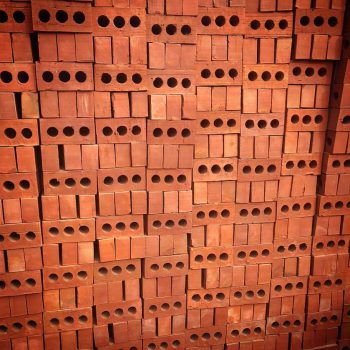
Natural red is a familiar choice for exposed brickwork. It creates a warm appearance and works with white plaster, concrete, timber and greenery.
It is suitable for:
Residential exterior walls
Boundary walls
Courtyard elevations
Feature walls
Contemporary farmhouse designs
Choose a consistent shade range when covering large wall areas. Too much variation can change the intended appearance.
Rustic Brown Bricks
<AsyncImage query="modern Indian architecture rustic brown exposed brick facade" aspectRatio="5:4" width="100%"/>
Brown bricks create a more muted and earthy appearance. They work well with natural stone, wooden windows and neutral exterior finishes.
They are suitable for villas, resort buildings and projects that use warm natural materials.
Dark and Charcoal-Toned Bricks
<AsyncImage query="modern house dark charcoal brown brick facade contemporary architecture" aspectRatio="5:4" width="100%"/>
Dark bricks can create contrast against light-coloured plaster and glass. They are often used on selected architectural sections rather than entire elevations.
Before selecting dark shades, consider direct sunlight and the building's surrounding materials. A large dark façade may absorb more solar radiation than a lighter surface.
Light and Muted Earthy Shades
<AsyncImage query="modern Indian architecture light muted beige earthy brick facade" aspectRatio="5:4" width="100%"/>
Muted earthy colours can create a softer appearance. They work with sandstone, lime plaster and minimalist exterior designs.
These shades may be suitable for buildings where the architect wants brick texture without a strong red or brown colour.
3. Match Brick Colours with Exterior Wall Finishes
Brickwork rarely appears alone on a modern building. It usually sits beside plaster, stone, concrete, glass or metal.
The colour combination should create a clear visual relationship between these materials.
| Exterior material | Brick colour combinations |
|---|---|
| White plaster | Natural red, brown or charcoal-toned bricks |
| Grey concrete | Rustic red, muted brown or dark bricks |
| Natural sandstone | Warm red, terracotta and earthy brown |
| Timber | Brown, red and muted clay shades |
| Black metal | Natural red, dark brown and selected light shades |
| Glass façades | Textured red, brown or darker feature bricks |
Use a limited palette for a balanced elevation. For many modern buildings, two main exterior materials and one accent material are sufficient.
4. Consider the Local Climate and Natural Light
India has different climatic conditions, and brick colour can appear different under varying levels of sunlight.
A colour that looks warm in a product photograph may appear brighter in direct daylight or darker under shade.
Architects should consider:
Direction of sunlight
Building orientation
Seasonal changes
Local dust and pollution
Rainfall and moisture exposure
Nearby buildings and landscape
For hot regions, large dark surfaces may absorb more solar energy than lighter surfaces. However, the actual indoor thermal performance depends on the complete wall assembly, insulation, ventilation and construction details.
In cities such as Jaipur, Ahmedabad and Jodhpur, earthy brick shades often complement regional stone and plaster finishes. In humid coastal locations, product suitability and moisture management deserve particular attention.
5. Understand How Brick Manufacturing Affects Colour
Brick colour is influenced by raw materials and manufacturing conditions. Two bricks with similar catalogue descriptions may still have different shades and textures.
Architects should understand the manufacturing process before selecting a product for exposed masonry.
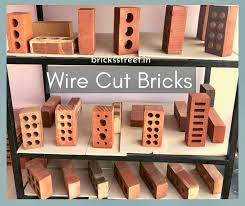
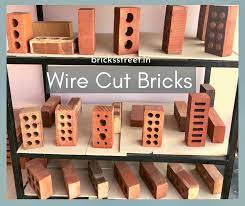
Wire Cut Bricks
Wire cut bricks are formed by extruding prepared clay and cutting it into individual units. Their appearance depends on clay composition, surface treatment and firing.
They are often selected for projects that need regular shapes and clean edges.
Pressed Bricks
Pressed bricks are shaped using a pressing process. Their surface appearance and dimensions depend on the manufacturing method and product specifications.
They may be suitable for projects that require particular shapes or surface finishes.
Modular Bricks
Modular bricks follow defined dimensional requirements. Their size can help coordinate masonry layouts, wall openings and construction modules.
Colour selection should still be based on physical samples and the intended application.
Solid Bricks
Solid bricks have a solid body rather than large hollow cavities. They may be used for different masonry applications depending on their tested properties and project requirements.
Hollow and Perforated Bricks
Hollow blocks and perforated bricks have cavities or openings. These products can differ in weight, thermal properties and structural performance.
Their suitability depends on the product specification and wall design. Do not choose them only because their colour matches the elevation.
6. Select the Right Brick Type for the Application
Brick colour is important, but the product must also suit the intended construction purpose.
| Brick type | Typical application considerations |
|---|---|
| Solid bricks | Masonry applications requiring a solid unit, subject to specifications |
| Hollow blocks | Wall systems where reduced unit weight or cavities are part of the design |
| Modular bricks | Projects requiring coordinated dimensions |
| 3 hole bricks | Applications based on the product's dimensions and tested properties |
| 8 hole bricks | Perforated masonry applications, subject to specification |
| 10 hole bricks | Applications requiring a specific perforated unit |
| Wire cut bricks | Exposed and general masonry applications, depending on grade |
| Pressed bricks | Projects requiring a particular manufacturing format or finish |
| Cladding bricks | Decorative wall finishes and façade applications |
The number of holes alone does not determine a brick's suitability. Architects should check dimensions, compressive strength, water absorption and relevant product standards.
For structural masonry, the project engineer should approve the specified unit and wall assembly.
7. Use Cladding Bricks for Decorative Exterior Sections
Cladding bricks can help create the appearance of exposed brickwork without using the same construction approach as full masonry units.
<AsyncImage query="modern Indian villa exterior brick cladding facade feature wall" aspectRatio="5:4" width="100%"/>
They can be used on:
Main entrance walls
Balcony feature sections
Exterior columns
Boundary walls
Courtyard elevations
Selected interior walls
A Cladding Bricks Manufacturer should provide information about tile dimensions, thickness, weight, finish and recommended fixing methods.
For exterior applications, check water absorption, substrate suitability, adhesive compatibility and weather exposure. Cladding should not be assumed to provide structural support or waterproofing.
8. Coordinate Brick Colours with Windows and Doors
Windows and doors occupy a large part of many modern façades. Their colours can change how brickwork appears.
Consider these combinations:
Natural red bricks with dark aluminium windows.
Brown bricks with wooden doors and frames.
Light earthy bricks with black metal fittings.
Charcoal-toned bricks with neutral window frames.
Rustic brickwork with natural timber details.
The goal is to create contrast without making the elevation look disconnected.
Before final approval, compare brick samples with actual window-frame and door-finish samples.
9. Think About Mortar Colour and Joint Profiles
Mortar joints can change the overall appearance of exposed brickwork. Even when the brick shade remains the same, a different mortar colour can make the wall look noticeably different.
A few common combinations include:
Matching mortar: Creates a more continuous appearance by keeping the joints close to the brick colour.
Light mortar: Makes individual bricks stand out and creates a stronger pattern.
Dark mortar: Produces a defined grid and can complement rustic or industrial-style elevations.
The joint profile also affects the appearance. Flush, recessed and weather-struck joints create different shadow patterns.
Prepare a sample panel with the selected brick and mortar before approving the full installation.
10. Approve Physical Samples Before Bulk Ordering
One of the most common mistakes is selecting brick colours using catalogue images alone.
Screens can change the appearance of a product. Lighting, camera settings and image editing may also affect the displayed shade.
Before placing a large order:
Request physical samples.
Review them in direct sunlight and shade.
Compare them with exterior paint and stone samples.
Check the surface texture and dimensions.
Prepare a small sample wall.
Approve the acceptable colour variation.
Record the approved product and batch details.
For large façades, sample approval helps reduce disagreements during construction.
11. Consider Maintenance and Long-Term Appearance
Brick surfaces collect dust and environmental deposits. Their appearance also depends on the surrounding climate and cleaning practices.
Before choosing a finish, consider how it will look after several years of exposure.
Review these points:
Surface texture and dust accumulation
Water absorption
Efflorescence risk
Cleaning requirements
Joint maintenance
Weather exposure
Availability of matching replacement material
Do not assume that darker bricks always hide dirt or that lighter bricks always require more maintenance. Actual results depend on surface texture, location and exposure.
For exterior brickwork, proper coping, sill details and moisture management are important.
12. Compare Brick Prices Before Finalising Procurement
Brick prices vary according to dimensions, manufacturing process, product grade, finish, order quantity and delivery location.
When comparing quotations, check the complete product and supply cost rather than looking at the unit rate alone.
The following searches are common during construction procurement:
These product categories are not directly interchangeable. Compare products with the same dimensions, technical properties and intended applications.
A useful quotation should mention:
| Price factor | What to verify |
|---|---|
| Product rate | Price per brick or agreed unit |
| Dimensions | Exact length, width and height |
| Product grade | Technical specification |
| Surface finish | Natural, textured or finished |
| Quantity | Minimum order and bulk rate |
| Packaging | Loading and protection arrangements |
| Freight | Transportation to the project site |
| Taxes | Applicable charges |
| Breakage | Inspection and replacement terms |
This approach gives architects and contractors a more realistic project estimate.
13. Buying Modular Bricks Online in India
Online purchasing can help builders and architects compare product specifications and supplier options.
If you plan to Buy Modular Bricks Online in India Price, review the complete product information before placing an order.
Check:
Product dimensions and tolerances
Brick grade and intended application
Available colours and finishes
Minimum order quantity
Manufacturing location
Transportation charges
Delivery schedule
Return and replacement conditions
Ask for physical samples before approving large quantities. Confirm whether the delivered product will match the approved sample and how batch variation is handled.
14. Choose a Manufacturer Based on Quality and Supply Capacity
A reliable manufacturer should provide consistent product information and clear procurement terms.
When comparing manufacturers, consider:
Manufacturing process
Available product range
Quality-control procedures
Technical specifications
Physical samples
Production capacity
Batch consistency
Packaging arrangements
Transportation support
A manufacturer should also explain which products are suitable for structural masonry, non-structural walls and decorative applications.
For large construction projects, confirm production capacity and delivery schedules before issuing the purchase order.
Common Mistakes to Avoid When Choosing Brick Colours
A few avoidable decisions can affect the final appearance of a building.
Choosing colours from photographs alone: Review physical samples.
Ignoring the architectural style: Select shades that support the building's design.
Using too many colours: Keep the exterior material palette controlled.
Ignoring mortar colour: Review the complete wall appearance.
Overlooking natural variation: Agree on acceptable shade differences.
Choosing decorative products for structural work: Confirm the intended application.
Ignoring local weather: Check exposure and maintenance requirements.
Comparing prices without specifications: Evaluate equivalent products.
Skipping the sample wall: Approve the final combination before bulk installation.
Frequently Asked Questions
Which brick colour is best for modern Indian architecture?
Natural red, rustic brown, muted earthy and charcoal-toned bricks can all work well. The right choice depends on the architectural style, local climate and other exterior materials.
Do brick colours change after installation?
Brick colour can appear different under changing daylight and surrounding finishes. Some natural variation may also occur between production batches. Review physical samples before ordering.
Are wire cut bricks suitable for modern house elevations?
Suitable wire cut facing bricks can be used for exposed elevations. Check dimensions, surface quality, water absorption and weather suitability before specifying them.
What is the difference between cladding bricks and regular bricks?
Cladding bricks are designed for decorative surface applications. Regular masonry bricks may be used for wall construction depending on their specifications. Cladding products should not automatically be treated as structural units.
How do I choose between solid bricks and hollow blocks?
The decision depends on wall design, structural requirements, weight, dimensions and technical performance. Ask the architect and structural engineer to approve the product for its intended application.
What affects brick prices in India?
Prices depend on product type, dimensions, manufacturing quality, finish, order quantity and delivery location. Transportation, loading and unloading can also affect the total cost.
Should architects approve a sample wall before construction?
Yes. A sample wall helps review brick colour, texture, mortar shade, joint profile and workmanship together. It is particularly useful for large exposed brick façades.
Conclusion
Choosing brick colours for modern Indian architecture requires a balance between appearance, material performance and project requirements. Natural red, brown, earthy and darker shades can all create attractive elevations when coordinated with the building's design.
Architects should also consider the brick type, manufacturing process, mortar colour and local climate. Physical samples and a sample wall help confirm the final appearance before bulk procurement.
Compare manufacturers using product specifications, quality records and complete delivered prices. The right combination of colour and material can give a building a distinctive appearance while supporting practical construction requirements.
Comments
Post a Comment